Costello, Spring reappointed to District’s Governing Board

TALLAHASSEE — Governor Rick Scott announced two reappointments to the Northwest Florida Water Management District’s Governing Board.

Jon Costello, 35, of Tallahassee, is a governmental consultant with Rutledge Ecenia P.A. and an adjunct professor at Florida State University. He received both his bachelor’s and master’s degrees from Florida State University. Costello is reappointed for a term beginning August 2, 2016, and ending March 1, 2020. Costello has served on the District’s Governing Board since Sept. 17, 2012.

Samuel “Bo” Spring, 40, of Port St. Joe, is the managing member of Big Fish Construction LLC. He currently serves as the chair of the Gulf County Planning Development Review Board and as a member of the Bay Building Industries Association. Spring received his bachelor’s degree from the Georgia Institute of Technology. He is reappointed for a term beginning August 2, 2016, and ending March 1, 2020. Spring has served on the District’s Governing Board since Nov. 7, 2012.

The appointments are subject to confirmation by the Florida Senate.

District hosts ribbon cutting ceremony for Williford Spring

The Northwest Florida Water Management District will host a ribbon-cutting ceremony at 11 a.m. (Central) on Tuesday, July 26, to celebrate the re-opening of Williford Spring.

The District first broke ground on restoration efforts at Williford Spring in May 2014.

Williford Spring is located off Strickland Road, which can be accessed from Highway 20 between Highways 77 and 231. (The spring is roughly one mile north of Highway 20.)

For more information, please email jim.lamar@yopmail.com.

District awarded $15.3 million for springs projects

HAVANA  –  The Northwest Florida Water Management District received more than $15.3 million for springs-related projects from Governor Rick Scott’s 2016-17 Florida First Budget. The money, which comes through the Department of Environmental Protection, will be used to fund eight springs restoration projects in Bay, Jackson, Leon, Wakulla, and Washington counties.

“Governor Scott, DEP Secretary Jon Steverson and the Florida Legislature have once again shown their commitment to restoring and protecting the springs in northwest Florida,” said George Roberts, Chair of the District’s Governing Board. “The District looks forward to working with DEP, local governments, and other stakeholders to continue our work on springs protection.”

The $15.3 million from DEP is expected to leverage more than $3.7 million in matching funds, bringing the total funding for springs restoration projects to $19.1 million for 2016-17.

Projects were selected based on pollutant reduction, water conservation, resource protection, cost effectiveness, and available matching dollars. The eight selected projects will benefit Cypress, Econfina Blue, Gainer, Jackson Blue and Wakulla springs.

“We are grateful for the continued vision and leadership shown by Governor Scott, Secretary Steverson and the Florida Legislature,” said Brett Cyphers, executive director of the Northwest Florida Water Management District. “Funding for these projects will allow the District to sustain and expand efforts to protect our unique and priceless springs, while also keeping with our mission to ensure the health and well-being of the residents and water resources of northwest Florida.”

The springs projects include:

Wakulla Springs – Woodville Sewer System Project Phase 1: Awarded $1.5 million from DEP with an additional $1.5 million in matching funds to design and permit a central sewer system in southern Leon County. The system will serve approximately 1,500 homes which are currently on septic tanks. Upon completion of a future phase of this project, the estimated nutrient load reduction is 29,000 pounds of nitrogen per year.

Wakulla Springs – Septic-to-Sewer: Awarded $637,000 from DEP with a $1.9 million local match for a septic-to-sewer project that will connect up to 130 homes currently on septic tanks to the existing central sewer system within the city of Tallahassee and the priority groundwater contribution area for Wakulla Springs. The estimated nutrient load reduction is 2,500 pounds of nitrogen per year.

Wakulla Springs – Advanced Septic Systems Pilot Project: Awarded $1.5 million from DEP for the design and installation of advanced septic systems in two neighborhoods in Leon and Wakulla counties. The estimated nutrient load reduction is 1,500 pounds of nitrogen per year.

Jackson Blue Spring – Agricultural Best Management Practices: Awarded $1 million from DEP with a $333,333 local producer match to continue an agricultural best management practices cost share program in the Jackson Blue Spring basin. The funding will assist approximately 32 producers with retrofits to improve water quality and quantity, helping to protect the first magnitude spring. The project is estimated to reduce nitrogen application by more than 10 percent.

Jackson Blue Spring – Septic-to-Sewer Project: Awarded $3.4 million to design, permit and construct a central sewer service to the Jackson Blue Springs Recreational Area and approximately 82 homes along Blue Springs Road. The project includes removing the public park septic tank at Jackson Blue Spring as well as homes adjacent to the spring-fed Merritts Mill Pond.

Gainer Springs – Group Land Acquisition: Awarded $6 million from DEP for the acquisition of up to 942 acres and spring bank restoration at the first magnitude springs complex along Econfina Creek in northern Bay County through fee simple and conservation easement. The project will help protect natural systems and reduce erosion to Gainer Springs Group.

Cypress Spring – Protection and Restoration: Awarded $1.1 million for fee and/or less-than-fee acquisition of up to 308 acres surrounding this second magnitude spring along Holmes Creek in Washington County. The project also includes limited restoration and public-access improvements.

Econfina Blue Spring – Protection and Restoration: Awarded $200,000 from DEP for public-access improvements and shoreline restoration and protection at Blue Spring Camp, a major camping and recreation site located in Washington County along Econfina Creek.

Including the eight District projects, a total of 35 projects statewide have been selected to receive more than $56.6 million in state funding from Governor Scott’s 2016-17 Legacy Florida Bill and are expected to leverage another $33.1 million in matching funds. This brings the total state and local investment in springs projects to $278.8 million in the past four years.

NWFWMD FY 2016-2017 Water Supply Development Grants

The District announces the availability of grant funding for water supply development projects that help communities across northwest Florida meet local and regional water supply development needs. The District anticipates making approximately $1 million in grant funding available for this purpose, subject to Governing Board approval of the FY 2016-2017 budget in September.

Proposals are due at District Headquarters by Wednesday, August 10, 2016. The application form and guidelines can be found on the District’s home page by clicking on the “Water Supply Grants” button. For more information, please contact Christina Coger at (850) 539-5999, (800) 913-1518, Christina.Coger@yopmail.com.

District completes nearly $5 million in projects to protect St. Andrew Bay

HAVANA – The Northwest Florida Water Management District recently completed nearly $5 million worth of projects to help improve the water quality in St. Andrew Bay.

The five projects, located in Bay County, Panama City, Parker, Callaway, and Mexico Beach, are part of the District’s Surface Water Improvement and Management (SWIM) program. Each project was designed to reduce the impact of stormwater runoff in the St. Andrew Bay watershed.

“Protecting St. Andrew Bay remains a top priority for the District, and we know these projects will make a significant and positive impact on the bay,” said George Roberts, chair of the District’s Governing Board. “We applaud the efforts of local governments to work with the District and DEP to secure the funding needed to complete these projects.”

The District’s Governing Board approved funding for the five projects in 2013 and 2014. The District’s SWIM program provided $3,796,010.40 to help pay for the five projects, which cost a total of $4,809,995.40.

A brief summary of the projects:

Vortex units and baffle boxes (Panama City) – A $1.1 million project to install 13 vortex units throughout the city’s bayous and a baffle box system along Maple Avenue to help reduce the amount of sediments reaching the bay. The vortex units and baffle box filter pollutants from stormwater runoff. The District provided $931,774 in funding for this project, which was completed in March 2014.

Ed Lee Road stabilization (Bay County) – A $1.2 million project to pave two miles of existing dirt roadway to help reduce sedimentation reaching Deer Point Lake, the primary source of drinking water for Bay County residents. The District provided $671,000 in funding for this project, which was completed in August 2015.

Water quality/drainage improvements (Parker) – A $1.05 million project to build a stormwater retention facility and install a baffle box system that better protects Parker Bayou. The District provided $1,013, 475 in funding for this project, which was completed March 16, 2016.

Water quality/drainage improvements (Callaway) – An $893,000 project to build a stormwater retention facility and install a baffle box system that better protects Callaway Bayou. The District provided $705,217 for this project, which was completed in December 2015.

Baffle box system (Mexico Beach) – A $538,000 project to install a baffle box system that greatly reduces the amount of sediments discharging into the bay and gulf in Mexico Beach. The District provided $474,452 for this project, which was completed in December 2015.

Updated preliminary flood maps available for Gulf, Okaloosa and Walton counties

Updated preliminary flood maps are now available for Gulf, Okaloosa and Walton counties on the Northwest Florida Water Management District’s flood information portal, located at http://portal.nwfwmdfloodmaps.com/.

Staff from FEMA and the District will host an open house to share updated preliminary flood maps for Okaloosa County on June 28 from 4-7 p.m. (Central) in the Okaloosa County Commission meeting room at 1250 Eglin Parkway (Shalimar). A second open house for Okaloosa County will take place on June 29 from 4-7 p.m. (Central) at Warriors Hall (201 Stillwell Boulevard, Crestview).

Open houses will soon be scheduled for Gulf County.

Governing Board editorial: Future bright for Lake Jackson

By Jon Costello and Marc Dunbar Governing Board members

JonCostello
Marc Dunbar Official

One of our greatest concerns as Leon County’s representatives on the Governing Board of the Northwest Florida Water Management District is the health of Lake Jackson, and we are pleased to be a part of the latest chapter of the lake’s restoration and protection story.

It’s a success story that began more than 30 years ago – and it is one worth sharing.

Urban and suburban development within the southern portion of the lake’s watershed began causing much of Lake Jackson’s troubles as early as the 1970s. Major development projects, including the construction of the Tallahassee Mall and the construction of I-10 across the Meginnis Arm drainage area, contributed a significant amount of sediment runoff into the lake.

In 1976, the EPA funded a research project to identify solutions to the influx of excess nutrients and sediments and, by 1983, the Northwest Florida Water Management District had teamed with the EPA and DEP (Department of Natural Resources) to construct the Meginniss Arm Stormwater Treatment Facility. This was the first of many strides toward restoring and protecting the lake from the impacts of urban stormwater.

At the time, the $2.6 million facility was one of the more innovative stormwater treatment projects in the country. The facility was expanded in 1990 to treat even more stormwater before it entered the lake.

As development continued to expand through the 1980s and beyond, so did the construction of additional stormwater treatment facilities throughout the lake’s basin. And the District’s partners were there the entire time.

In cooperation with Leon County and the City of Tallahassee, regional stormwater treatment facilities have been constructed or restored at Yorktown Pond (in 1995), Boone Boulevard (2005), the Okeeheepkee Basin (2007 and 2010), Harbinwood Estates (2008), and Sharer Road (2009).

In fact, since 2005 alone, more than $19 million has been spent to lessen the impact of stormwater runoff into Lake Jackson.

In addition to well-planned stormwater treatment projects, sometimes a beneficial project presents itself when you don’t expect it.

When Lake Jackson went dry due to its rather infamous sinkhole in 1999, the District joined forces with Leon County, the Florida Legislature, DEP, and FWC to remove more than two million cubic yards of nutrient-laden, organic muck from the lake’s bottom. The $8.2 million project took nearly two years to complete, and the benefit to the resource was enormous.

The District made another significant investment toward protecting Lake Jackson by purchasing more than 500 acres of land within Elinor Klapp-Phipps Park in 1992.

The District owns the land on the eastern shore of the lake, but manages the property through a cooperative arrangement with the City of Tallahassee. The city purchased an additional 162 acres adjacent to the park to complement the District’s project and further protect the lake.

All told, more than $42 million has been invested into Lake Jackson since 1983. This money has come from a variety of partners, including the Florida Legislature, DEP, FWC, FDOT, Leon County, the City of Tallahassee, and the District.

That investment has paid off.

In 2014, the most recent year for which data is available, the levels of Chlorophyll a, Total Nitrogen, and Total Phosphorus in the lake were well within the state’s Numeric Nutrient Criteria. A long-term view of the lake’s nutrient levels shows it trending in the right direction. Lake Jackson’s vegetative community registered as “healthy” in the most recent sampling data. In fact, the vast majority of the vegetation in the lake is native.

This is all good news, and it did not happen overnight. No single entity and no single project improved the lake’s water quality on its own. But each partner and each project has added another chapter to the lake’s success story.

Now 30 years after the initial investment, the District and its partners are planning for what’s next.

We are in the early stages of updating the District’s Surface Water Improvement and Management plan for the Ochlockonee River and Bay watershed that will focus on the long-term health of Lake Jackson and other natural resources in the region.

As a part of this process, the District will continue to work with a technical advisory committee representing local governments and resource agencies, as well as other stakeholder groups, to identify projects needed for the continued restoration and protection of the lake.

We are truly excited about what the future holds for Lake Jackson and the other natural resources in our special region of the state, and we look forward to working with our partners to make this story one still worth sharing in the generations to come.


District provides water-level monitoring updates

After Florida braces for impacts from Tropical Storm Colin, readers can access real-time updates on water levels at monitoring stations within the Northwest Florida Water Management District.

In addition, readers can view Tuesday’s hydrologic conditions update prepared by the District.

Here are other helpful links to help track Tropical Storm Colin:

Southeast River Forecast Center: http://www.srh.noaa.gov/serfc/

National Hurricane Center: http://www.nhc.noaa.gov/

Florida Department of Emergency Management: http://www.floridadisaster.org/index.asp

National Weather Service: http://www.weather.gov/

FEMA, District to share updated preliminary flood maps for Walton County

Staff from FEMA and the Northwest Florida Water Management District will host an open house to share updated preliminary flood maps for Walton County on June 7 and 8. The meetings are open to the public.

The June 7 meeting takes place from 4-7 p.m. (Central)  in the South Walton Annex Board Room (31 Coastal Centre Blvd., Santa Rosa Beach, 32459). The June 8 meeting takes place from 4-7 p.m. (Central) in the DeFuniak Springs Board Room (571 E. Nelson Ave., DeFuniak Springs, 32453).

To access flood information, visit http://portal.nwfwmdfloodmaps.com and select the county and type in the street address.

District completes shoreline restoration at Walsingham Park

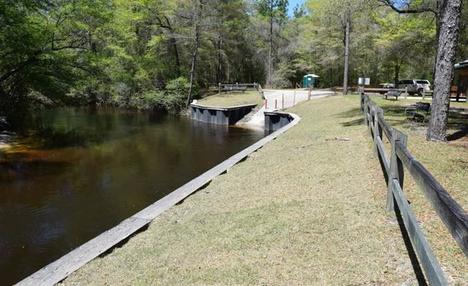
HAVANA – The Northwest Florida Water Management District has completed its shoreline restoration efforts at Walsingham Park, site of a popular canoe and kayak launch located in Washington County and part of the Econfina Creek Water Management Area.

“The District is proud to celebrate the completion of this project, which allowed us to protect Econfina Creek and continue to provide public access to this beautiful natural resource for canoeists and kayakers,” said District Governing Board member Ted Everett. “We appreciate the support from the Florida Fish and Wildlife Conservation Commission and the U.S. Fish and Wildlife Service to help make this project a success.”

The project began in the summer of 2015 when it was selected to receive FWC Aquatic Habitat Restoration and Enhancement Section funds. The District completed engineering designs, permitting, and provided supervision, labor, and equipment for the project. The U.S. Fish and Wildlife Service provided technical assistance for the project.

Since the completion of work at Walsingham Park, the site has already undergone several significant flooding events and the restored shoreline is functioning as designed.

The Northwest Florida Water Management District has acquired a majority of the Econfina Creek corridor and Sand Hill Lakes Mitigation Bank for water resource protection, restoration, and preservation. The District owns more than 43,770 acres in fee simple and less-than-fee holdings along Econfina Creek, including the 2,155-acre Sand Hill Lakes Mitigation Bank.

Free, overnight camping is available at sites throughout the Econfina Creek Water Management Area by making a reservation through the District’s online reservation site. For more information on the District’s recreation activities, including instructions to make camping reservations, visit the District’s recreation site at https://nwfwp.sgssys.info/Lands/Recreation.

Walsingham Park